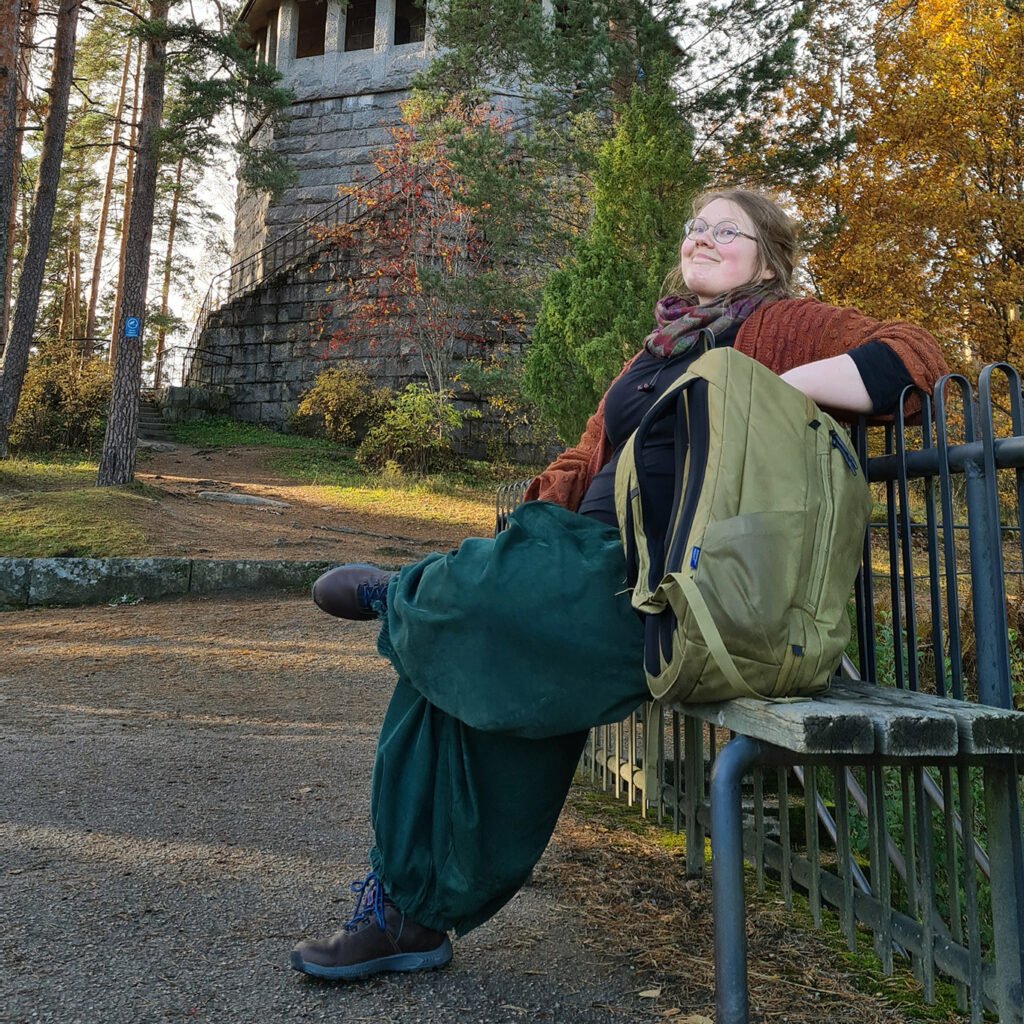

Ragne Schults (b. 1990) is an Estonian illustrator and artist currently working in clay. She hand-builds both figurative and functional pieces, all in her characteristically playful, expressive, and narrative-driven style. She is also a reader, a rambler, a lover of rivers and willows, an admirer of follies and unnecessary architectural whims, a gazer upon things manifold and a contemplator of thoughts fewerfold, a danger to potted plants, a loving cup short a few handles, a combiner of wordy and worldly pursuits.
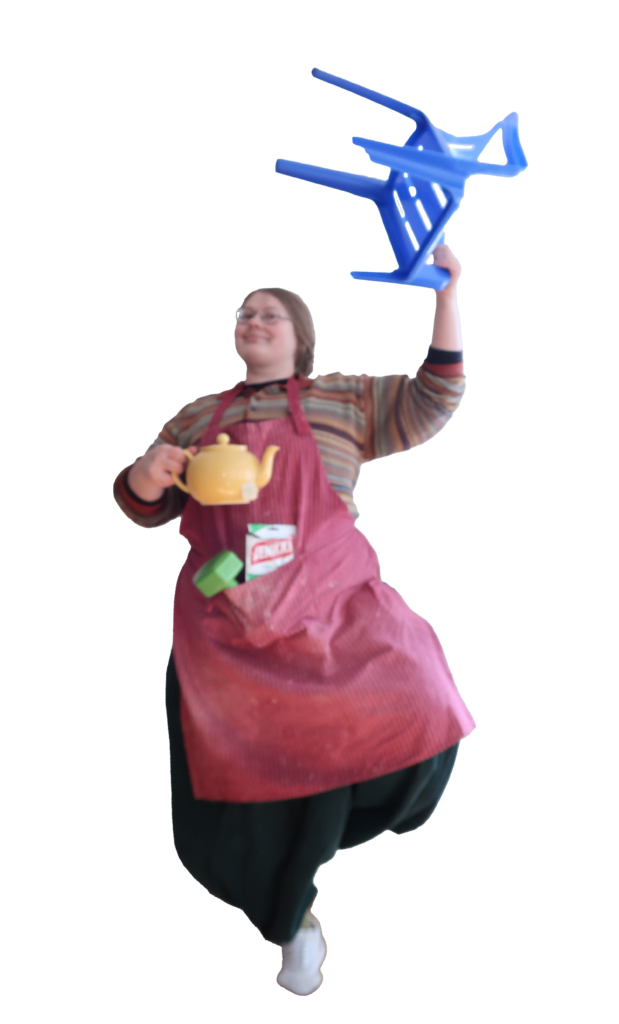
When the team and I approached her for a line or two to patch together an artist’s statement, she looked very put out and asked first for our credentials and then for our biscuits. Here’s what we got after the sacrifice of three brave chocolate digestives:
“I just find ceramics endlessly fascinating, both as a maker and a user. The kitchen cabinets of my childhood home were mainly full of chipped remnants from the soviet era and a combination of whatever mass-produced oddness the malls were stocking here in the 90s – at best, cheap and cheerful (I distinctly recall green cartoon cows on egg cups), and at worst, pretentiously sterile and distinctly mausolean (black octagonal plates, anyone?). The country was finding its feet again and my parents were setting up house, every decision had a questioning lilt of “is this how things are done?”, swiftly pushed aside by some other, more pressing matter. It didn’t even occur to me that crockery could be an arena for preference and consideration. That there are saucers and teapots out there that whisper upon approach, hum in tune with the disturbing music of your soul and vehemently underline that you are the right person in the right place at the right time (now drink the bloody cocoa, Margaret!).
This finally transpired, when, visiting a charity shop in my teens, I happened upon a set of Höganäs teacups from the 1960s – I reached out, cupped a cup, the round generosity sitting just right in my hands, the proportions of the dainty handle (both unlikely and unutterably perfect), the smooth moss green glaze a revelation. I left the shop a fundamentally altered person, gently clutching a paper bag.
Since then, I’ve enjoyed a heady dialogue with the ceramic cast-offs that make their way to charity shops, learning from when and whence they came, how they relate to the context of their time and reflect its sensibilities. I’ve discovered favourite patterns and shapes and makers, outgrown some, put them back in circulation, and now smile fondly whenever our paths happen to cross again. All this is a testament to the miracle of the medium – functional ceramics is art that you can hold, cradle, nail-tap, lick, knock your teeth on, and smash to smithereens for emotional emphasis. Just clay, fire, and a nauseating amount of skill to make something that may, with minimal care, be passed down through generations, do hundreds of charity shop rounds, witness the entirety of the human condition, outlast civilizations.
While 20th century ceramics is a wide and generous field, my access to it was mainly through a distinctly Scandinavian filter, so as the hunger kept growing, I scuttled into more international collections, sniffed and snooped at the older and the more intricate, alternating outbursts of why(?) and how(?) and oh my(!), and when even that wasn’t enough, I finally yielded, got hold of some clay and called upon my fidgety fingers to help me learn, explore and understand through practice.
This is how I ended up elbow-deep in clay, and, relatively speaking, quite a happy captive. I cannot profess to any astounding technical mastery, but have learnt to listen to the clay, let it have its way with me, but also, in asking for things in return, found it miraculously accommodating. And through all of this, I have become a part of the awe-inspiring weave of potters that has been clobbering, caressing and teasing this earth since time immemorial.
With my small pudgy hands, I can sculpt little toesy-woesies on lumpy feet and stick them on a jug, contributing to thousands of years of tradition, giving in to the human impulse to make something a bit silly, just to get someone to grin, giggle and guffaw. The older I get, the more vital this aspect – the humour and the comfort. And this from someone who takes everything too seriously, but also finds this aspect of herself excruciatingly dull, so tries to apply the beautifully undignified remedies of “funny hat”, “spontaneous hopscotch”, “dainty vase covered in curses in cursive”, “sculpture of a girl with spaghetti in hair and a trio of conkers in pocket”, “irreverent reworking of 17th century posset pot”, “feline possessed by possum”. And it does help, but I’m also hopeful that it resonates with others. If only to remind the lot of us of the fact that it’s all so brilliant and terrifying and profoundly unlikely – the cat arching its back to meet your hand, the button missing on my cardigan, the wind lovingly ruffling the geraniums, your eyes following along these very lines, this whole being alive thing.
Will that do? You don’t think it got a bit soppy in the end there? No? Good. You don’t happen to have any more of those biscuits, do you?”